Generally, Labradoodles make wonderful companions at home, as they’re playful, intelligent, and gentle enough to fit into almost any family. But like other breeds, they come with a few health issues you should be aware of before bringing one home.
Fortunately, most of these issues are manageable (especially when you spot them early). And with the right care and regular vet visits, Labradoodles usually go on to live long, healthy, happy lives.
This article covers the most common conditions to watch for, what a proper health check involves, and some practical feeding and training tips to keep your canine companion feeling their best. If you’re considering a Labradoodle puppy, the team at oodle pups is a great place to start.
Common Labradoodle Health Issues to Watch For
Most Labradoodle owners don’t realise their dog is showing initial signs of a health issue until it’s already progressed a bit. In fact, some of the most common conditions in this breed are easy to miss in the early stages.
These are the three most common issues worth knowing about:
Hip and Elbow Dysplasia
Hip and elbow dysplasia are inherited conditions where the joints develop abnormally during a puppy’s growth, which can lead to pain and arthritis over time. These diseases rank among the most common Labradoodle health issues, so every owner should know what to look for.
Elbow dysplasia usually shows as front-leg lameness in younger dogs, often worsening after a daily walk. You might also notice your dog hesitating to get up after a nap or favouring one leg after a walk (signs many owners brush off initially).
Your veterinarian will typically recommend rest, anti-inflammatory medication, and weight management to help with the condition. If your younger dog shows this condition, your vet may suggest surgery to correct the joint alignment before arthritis has a chance to set in.
Skin Allergies and Ear Infections
Labradoodles can react to food allergies, fleas, pollen, and dust mites, with symptoms like red, itchy skin around the belly, paws, and ears.
In many cases, owners notice an ear infection by smell before they see it. Their floppy, hair-filled ears trap moisture and bacteria, which makes infections a recurring problem.
That’s why managing these issues often comes down to regular grooming, adjusting your dog’s diet, and staying on top of flea prevention. Plus, you should also clean their ears with a vet-suggested solution.
Progressive Retinal Atrophy
This inherited eye condition develops slowly and can lead to blindness over time. It usually starts with night blindness, followed by difficulty seeing in daylight.
Early on, it may look a lot like anxiety, so we recommend a vet check whenever behaviour shifts suddenly. Reputable breeders also prioritise eye testing and keep those results on record before breeding, especially when working with multi-generational Australian Labradoodles.
New Puppy at Home: Health Checks That Count
Bringing a new puppy home is exciting, and staying on top of a few health checks from the start makes any issues much easier to manage.
Here’s what to watch for in those first few weeks:
Your New Puppy’s First Vet Visit
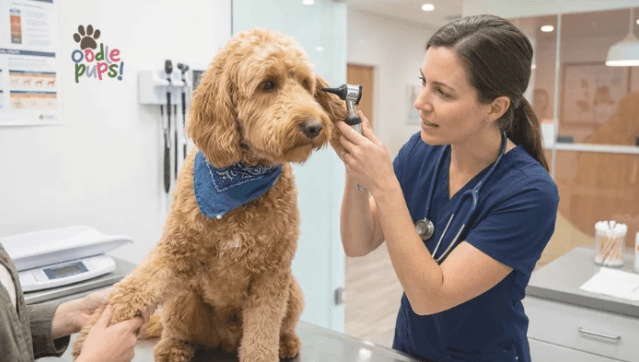
Book your new puppy’s first vet visit within a few days of bringing them home. It may feel like organising many things at once, but this helps confirm their health, update vaccinations, and catch any early issues (there’s often a lot of information, so writing your questions down beforehand helps).
During the visit, the vet will:
- Check your pup’s weight
- Examine the heart, eyes, ears, and joints
- Review overall health
- Walk you through a vaccination schedule
- Explain parasite prevention and treatment
They’ll often bring up puppy training as well, pointing you toward the right approach based on your dog’s age and health.
See also: Enhancing Healthcare Infrastructure with Fixed Rooflights for Sale A Comprehensive Guide
What a Responsible Health Check Covers
Aside from a physical examination, genetic history from the breeder is just as important to review. Labradoodles carry several inherited conditions, and without knowing the parents’ health records, some issues can go completely undetected until symptoms appear later.
Responsible Australian Labradoodle breeders usually provide solid records of hip and elbow scores, eye testing, and DNA panels. These checks can catch inherited conditions (hip dysplasia, elbow dysplasia, and progressive retinal atrophy) well before symptoms appear.
For example, at Oodle Pups, every prospective owner gets to review Pip and Rosie’s full health documentation before making a decision. And every RightPaw-certified breeder follows the same approach by providing verified health records.
Can Raw Bones Help or Hurt? What Vets Say
Raw bones can support your puppy’s dental health and give them mental stimulation, but they also come with risks that you should understand before offering one to your dog.
To manage those risks, vets usually recommend a few simple guidelines:
- The Risks: Raw bones are popular with pet owners, but risks like tooth fractures and digestive blockages are more common than most people expect.
- Raw vs Cooked Bone: Vets generally suggest raw meaty bones over cooked ones, because cooked bones splinter easily and cause most feeding accidents.
- Bone Size Counts: Always supervise your dog with any bone, and pick an appropriately sized one. It’s because a bone that’s too small can become a choking risk, while one that’s too large may be difficult to chew safely.
- The Benefits: Alongside the risks, raw bones do offer benefits. They help keep teeth clean, provide a satisfying chew, and support a more balanced diet.
- When to Call Your Vet: Fresh drinking water should always be available when your dog is chewing. And if your pet shows any signs of discomfort afterwards, speak to your veterinarian straight away.
Bottom line: When you use them sensibly and with proper supervision, raw bones can be a safe and enjoyable part of your dog’s routine.
Dog Training and Your Labradoodle’s Long-Term Health
Now that you know what health issues to watch for, it helps to understand how daily habits like training play into your dog’s overall well-being.
Labradoodles are naturally intelligent dogs. But without regular mental and physical outlets, that energy can show up as stress, anxious behaviour, or difficulty around other dogs and other pets.
In such a situation, consistent training plays a vital role in teaching good behaviour. It builds confidence and reduces stress. As a result, everyday situations, including vet visits, feel less overwhelming. Plus, a dog that responds to basic commands is easier to handle during health checks, which allows your veterinarian to carry out a more thorough examination.
Training sessions also support your dog’s daily routine in ways you might not expect. Active dogs who get regular mental stimulation through training tend to sleep better, eat more consistently, and stay happy into their older years.
Quick tip: You should start the training and socialisation period, roughly between 3 and 16 weeks, which gives your pup the best foundation for good behaviour and a healthier life overall.
Your Labradoodle Deserves a Healthy Head Start
Labradoodles are wonderful animals, and with the right care, most health issues are easy to manage. Staying on top of vaccinations, regular vet visits, a balanced diet, and consistent training goes a long way toward keeping your dog healthy and happy for many years.
Prevention is always easier than treatment. That’s why knowing the signs early, choosing a responsible breeder, and building good habits from puppyhood give your furry friend the best possible lead into a long, healthy life.
If you’re looking for a well-bred, health-tested Labradoodle puppy, Oodle Pups is one option to explore. Our Pip and Rosie’s pups are raised with care, fully vaccinated, and come from a home where health and temperament always come first.


 By
By